The Cross as a Symbol of Service and an Inspiration
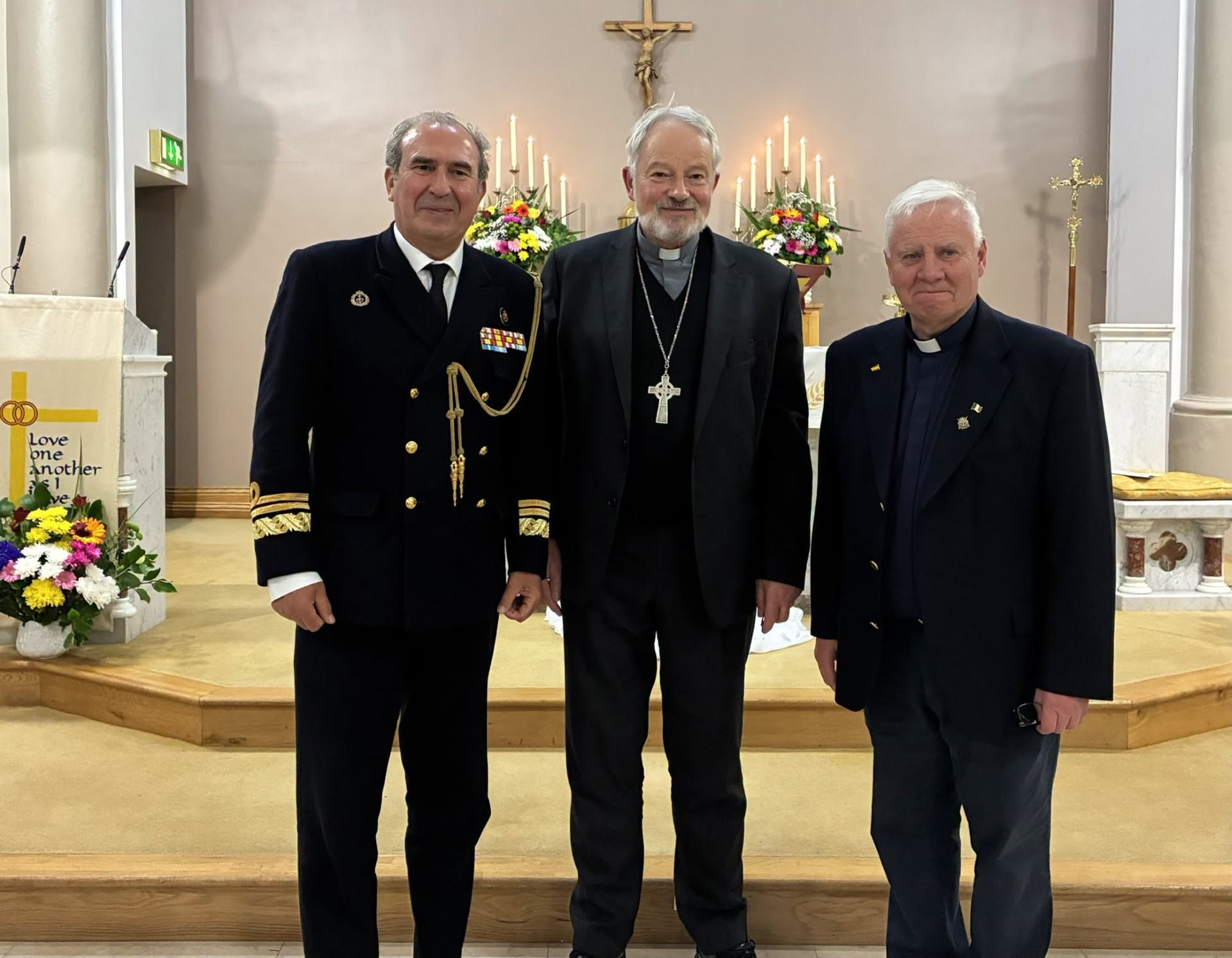
Homily of Bishop Kevin Doran on the occasion of the Presentation of his Grand Cross of Naval Merit, by Admiral Torres Pineyro, to the Church of Mary Immaculate, Grange, Co. Sligo, Saturday 19 September 2026
HR and Human Relationships
As we listen to the Gospel this evening, we hear it as Jesus told it. It is about HR management. In his attempt to be generous, the landowner gets himself into trouble with the majority of the workers, who feel that they are being treated unfairly, even though they are getting exactly what was agreed. In the final analysis, HR is all about fairness in human relationships.
Human relationships are always challenging, whether they have to do with family, or employment, or the relationships between tribes and states. Some people have influence or economic power and they tend to get what they want. Others take what they get, because they are not in a very strong position to argue.
Doing What is Right:
The landowner commits to doing “what is right”. I think the crux of this whole Gospel story is the question of how we arrive at our understanding of what is “right.” I want to put before you three things that we often hear people say in their dealings with others:
I want: I want some chocolate; I want diamonds,
I need: I need food; I need surgery; I need somewhere to live
I am entitled: I deserve something more or something different because of who I am
Much of what goes on in society, and in the wider world is dictated by what people want, or they think they deserve. I want is sometimes presented as if it meant I need.
Families tend to focus more on what people need, and that is probably because families for the most part are built on love. Parents often deprive themselves in order to make sure that their children get the best. Adult children often go to great lengths to care for their parents in old age. But even in the family, greed can take over from need.
It is more difficult to convince people that society should operate on the basis of what people need. In our Gospel passage today, Jesus seems to be suggesting that we should pay more attention to needs. The need of the workers, for example, can be thought of in terms of:
- their need for an income that will allow them and their family to live with dignity
- their need to be allowed to participate fully
Applying the Gospel:
In the first reading, the prophet Isaiah, speaking in God’s name says: “my thoughts are not your thoughts; my ways not your ways”. The employer in the Gospel is an image of God, who always does what good. God does not judge us on the basis of what we deserve, (just as well), and He does not always give us what we want (just as well).
The prophet Isaiah invites us to “seek the Lord” and to adopt a new way of thinking and acting. It is what Pope Leo recently called “a change of mindset”. Catholic Social Teaching offers us some basic principles which might help us. I mention just two.
- The principle of the “universal destination of goods”. The resources of the universe were intended for all. Private ownership of property carries with it what Pope John Paul II called a “social mortgage”. In other words, owning property brings responsibilities with it, especially towards those who have nothing.
- The right of every person to participate fully in society and not to be excluded for one reason or another
Military Power in the Service of Peace:
Este fin de semana en Grange recordamos la Armada Española; no solo los tres barcos que se perdieron en Streedagh, sino también a más de mil marineros y soldados que murieron en una playa irlandesa, lejos de su hogar. Los encomiamos a la misericordia de Dios.
Hace cuatrocientos cincuenta años, al pueblo irlandés se le negaron los derechos humanos básicos de autodeterminación y libertad religiosa. Contábamos a España entre nuestros amigos y buscábamos su apoyo. Muchos irlandeses se refugiaron en España en los años siguientes y sirvieron con distinción en los ejércitos españoles.
Hoy, en un mundo muy diferente, Irlanda se mantiene orgullosamente, junto a España, promoviendo la paz en el mundo y defendiendo los derechos de los oprimidos, incluido el pueblo palestino. Nuestra historia nos ha enseñado lo que significa ser perseguidos por ser diferentes en la fe y la cultura.
En su reciente Carta Encíclica Magnifica Humanitas, el Papa León escribió: “En nuestro tiempo, se está imponiendo una cultura del poder, en la que la disponibilidad de recursos y la capacidad de dominar tienden a dictar la agenda y los criterios para la toma de decisiones. De esta manera, el bien común de la humanidad queda relegado a un segundo plano…” Nuestra fe nos enseña que el poder siempre debe usarse para servir al bien común y nunca para dominar a otros. El propósito del poder militar es proteger y defender.
Desafortunadamente, cuando el poder cae en manos de líderes sin escrúpulos, tiende a usarse para oprimir a las personas y para el enriquecimiento personal. La Gran Cruz del Mérito Naval es un símbolo de confianza y servicio distinguido, que se entrega a los oficiales de alto rango en el Armada Española. Esta noche, nuestro amigo, el almirante Torres Pineyro, presentará su Gran Cruz a nuestra Iglesia Parroquial como un recordatorio del vínculo histórico que existe entre esta parroquia y la Armada Española.
Este es un gesto de agradecimiento por una vida de servicio y por la culminación segura de su misión. Dada la relación entre la Cruz y la persona de Jesús, me parece que esta Gran Cruz puede seguir sirviendo en el futuro, como una inspiración para todos nosotros a construir la paz haciendo justicia, mientras recordamos las palabras de Jesús: “Bienaventurados los que trabajan por la paz, porque ellos serán llamados hijos de Dios”.
This weekend in Grange we remember the Spanish Armada; not just the three ships which were lost at Streedagh, but more than a thousand sailors and soldiers who died on an Irish beach, far from home. We commend them to the mercy of God.
Four hundred and fifty years ago, Irish people were denied the basic human rights of self-determination and religious freedom. We counted Spain among our friends and looked to her for support. Many Irish took refuge in Spain in the years that followed, and served with distinction in Spanish armies.
Today, in a very different world, Ireland stands proudly, alongside Spain, in promoting peace in the world and defending the rights of the oppressed, including the Palestinian people. Our history has taught us what it means to be persecuted for being different in faith and culture.
In his recent Encyclical Letter Magnifica Humanitas, Pope Leo wrote: “In our time, a culture of power is taking hold, in which the availability of resources and the ability to dominate tend to dictate the agenda and criteria for decision-making. In this way, the common good of humanity is relegated to the background…” Our faith teaches us that power must always be used to serve the common good, and never to dominate others. The purpose of military power is to protect and defend. Unfortunately, when power falls into the hands of unscrupulous leaders, it tends to be used to oppress people and for personal enrichment.
The Grand Cross of Naval Merit, is a symbol of trust and distinguished service, presented to high-ranking officers in the Spanish Military. This evening, our friend, Admiral Torres Pineyro will present his Grand Cross to our Parish Church as a reminder of the historical bond the exists between this Parish and the Spanish Navy. This is a gesture of thanksgiving for a life of service and for the safe completion of his mission. Given the connection between the Cross and the person of Jesus, it strikes me that this Grand Cross can continue to serve in the future as an inspiration to all of us to build peace by doing justice, as we remember the words of Jesus: “Blessed are the peacemakers, for theirs is the Kingdom of Heaven”.